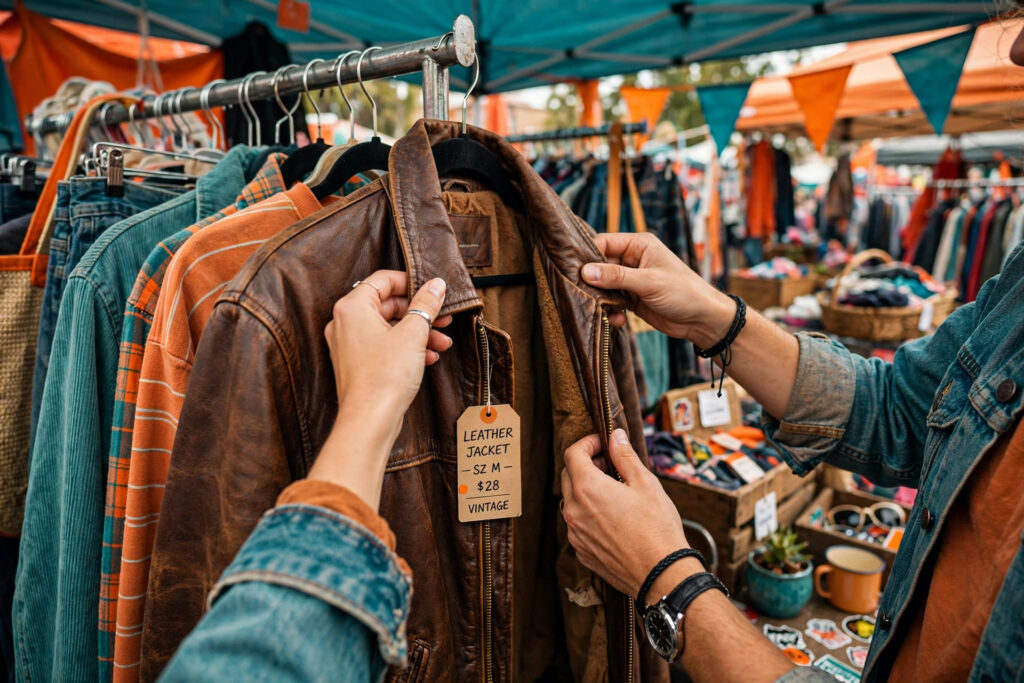
You can spot real leather at the thrift store in about a minute if you know where to look. Check the grain, bend the material, sniff it, read the tag, and test the edges. Do those five things in order and most fakes give themselves away fast.
Start With Your Eyes: Read the Grain
Hold the piece up to the light. Tilt it. Real hide never looks perfectly uniform, and that is the whole point.
Genuine grain looks a bit random. You will see tiny pores, small scars, and lines that wander instead of repeating in a neat pattern. Faux leather tends to repeat itself. Same pebble shape, same spacing, row after row. Once you notice that stamped-on sameness, you can’t unsee it.
Run your gaze along a seam or a worn spot, too. Real leather often shows slight color shifts where the surface has stretched or softened over time. Vinyl and polyurethane coatings usually stay one flat shade, even on elbows, handles, and corners that should show wear.
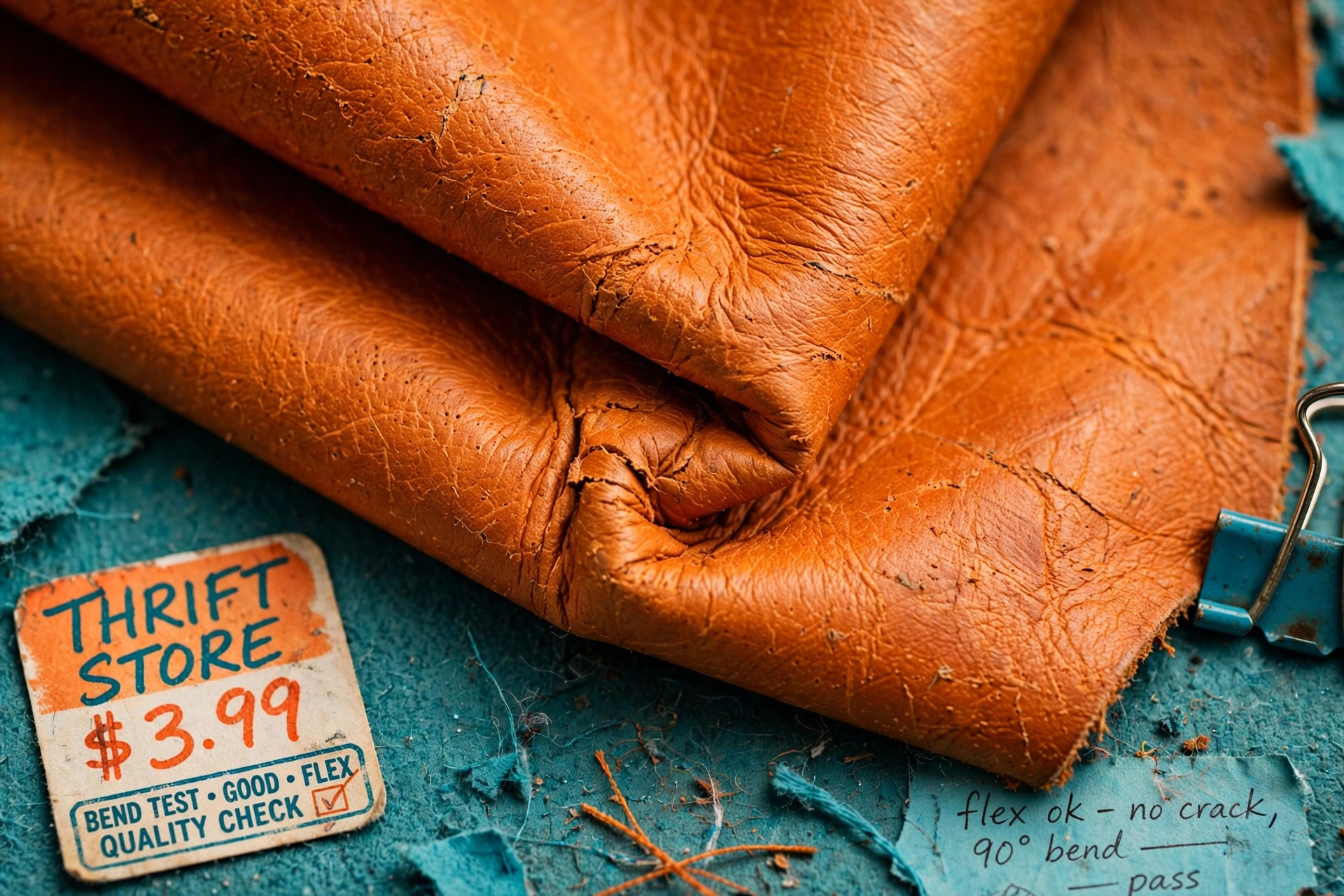
Up close, real grain looks irregular — pores, creases, and tiny marks that never repeat in a tidy pattern.
The Bend Test: Ten Seconds, Big Clues
Now bend it. Gently fold a soft spot, like the sleeve of a jacket or the side of a bag, and watch what happens to the surface.
Real leather creases in fine, soft lines. The color may lighten a touch in the fold, then settle back when you let go. It feels supple in your hands. Not stiff. Not plasticky.
Faux material fights back a little. It can crease in sharp, papery folds, or it stays suspiciously smooth because the coating just stretches over the base. Press a fingertip hard into the surface and hold for two seconds. Real hide wrinkles around your finger in tiny lines and slowly recovers. Coated synthetics often pop right back with no mark at all, or they crackle faintly. That crackle? Big red flag.
Smell It. Yes, Really.
Don’t be shy about this one. Every seasoned thrifter does it.
Real leather has a warm, earthy smell. A bit sweet, a bit animal, kind of like a saddle shop or an old library chair. You will know it once someone points it out to you. Faux leather smells like plastic, chemicals, or a new shower curtain. Sometimes it smells like nothing at all, which is its own clue.
A quick warning, though. Heavy perfumes, smoke, and storage odors can mask the scent on secondhand pieces. So treat smell as one clue, not the verdict. If the grain and bend test already point one way, the nose usually just confirms it.
Check the Edges and the Back
Flip the piece over. Look at a raw edge, an unlined strap, or the inside of a belt hole. This is where fakes run out of tricks.
Real leather has a fibrous, suede-like back and rough, uneven edges. You might see loose little fibers, almost like soft felt. According to guidance from the Leather Working Group, an industry body focused on leather manufacturing, genuine hide is a single natural material, so its cross-section looks fibrous all the way through rather than layered.
Faux leather gives away its layers. Look close and you may spot a fabric backing, a foam middle, or a shiny coating peeling at a corner. Smooth, painted, perfectly sealed edges also lean synthetic. Real edges can be finished, sure, but they rarely look dipped in plastic.
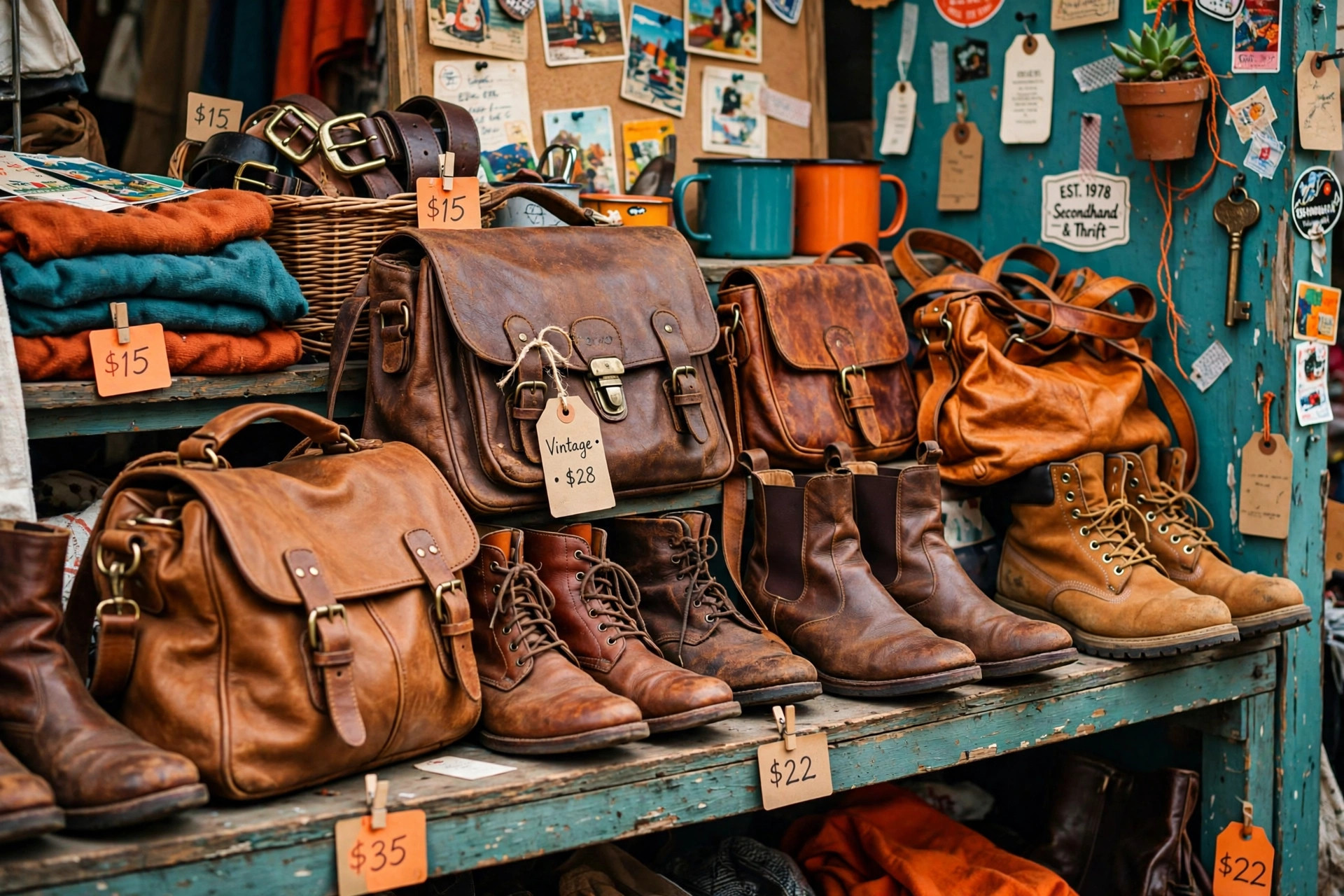
Bags and boots are worth the full check — handles, straps, and soles wear first, and fakes show it.
Read the Tag Like a Detective
Tags help. They just don’t tell the whole story, so read them with a bit of suspicion.
According to the U.S. Federal Trade Commission, sellers in the United States must not misrepresent leather content, and terms like “bonded leather” describe material made from shredded leather fibers held together with binder, not a solid hide. That distinction matters at the register. A jacket tagged as bonded leather will wear very differently from a full-grain one, and the price should reflect that gap.
Watch for slippery wording. “Leather-look.” “Leather-touch.” “Man-made leather.” Those phrases signal synthetic material in most cases. A tag that simply lists “genuine leather” is a starting point, not a guarantee, since the term describes a grade as much as a material. Cross-check the tag against the grain, the bend, and the edges before you trust it.
No tag at all? That happens a lot with older and handmade pieces. Don’t panic. Your hands and eyes can still do the job.
The Water Drop Test (When the Store Allows It)
Got a water bottle handy? A single tiny drop can tell you a lot, if staff are fine with it. Ask first. Seriously.
- Place one small drop on a hidden spot, like inside a cuff.
- Real, unfinished leather slowly absorbs the drop and darkens for a moment.
- Coated faux leather lets the drop bead up and roll around on the surface.
Skip this test on finished, patent, or delicate pieces. Some real leathers have protective coatings that block absorption too, so a beading drop does not automatically mean fake. Use it as a tie-breaker, not a first move.
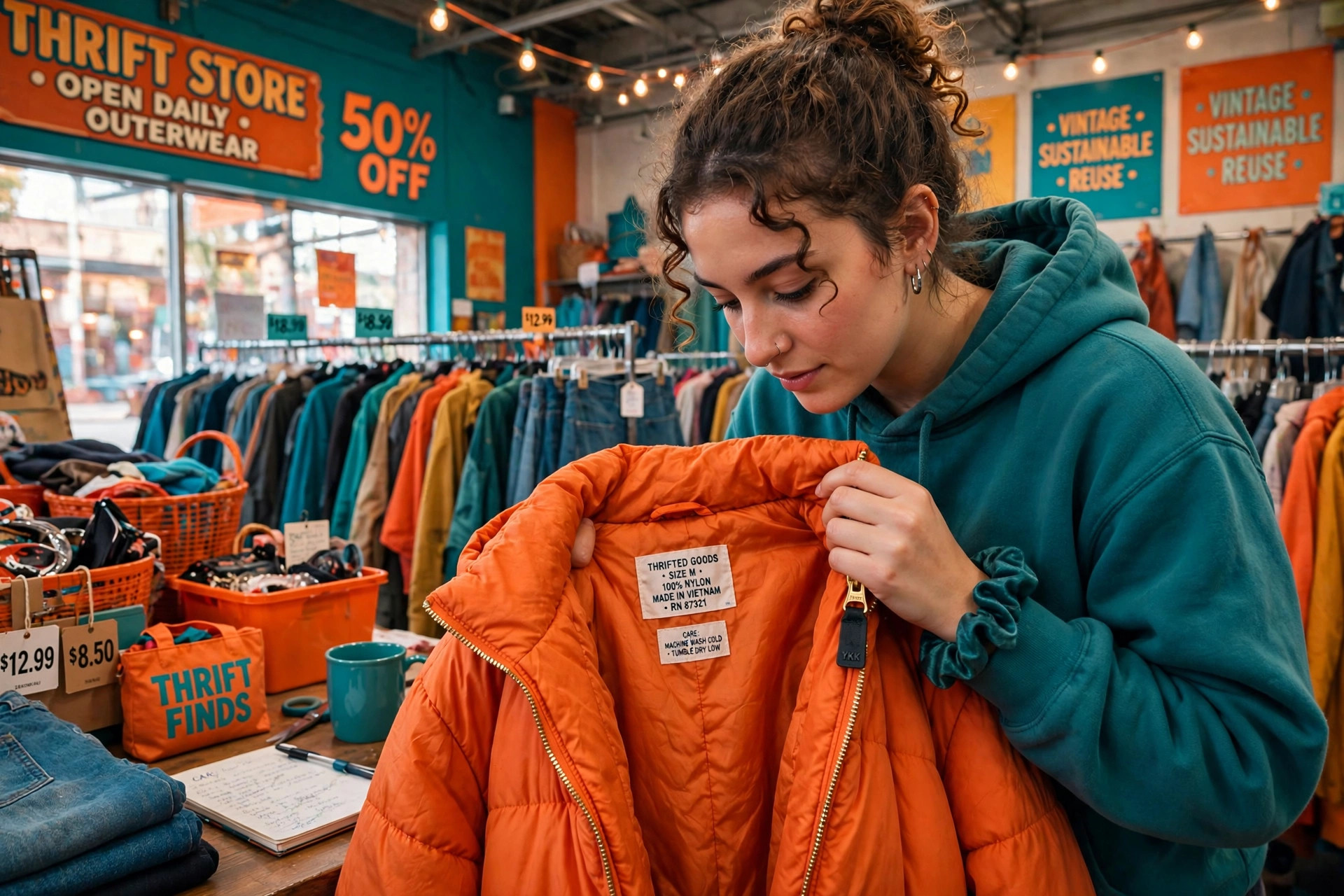
Tags, linings, and zippers hide the best clues — check the inside before you check out.
Don’t Forget Zippers, Linings, and Hardware
A great hide paired with cheap hardware happens, especially on older pieces. Still, the details often match the material’s quality, and they are quick to check.
Run every zipper. Tug the straps. Peek at the lining for rips, stains, and that crinkly synthetic feel. Quality jackets and bags often carry sturdy metal zippers, clean stitching, and linings that feel substantial rather than papery. Loose threads everywhere? Wobbly rivets? That doesn’t prove the leather is fake, but it does change what you should pay.
Stitching tells a story, too. Even, tight stitches that sit in a straight line suggest careful construction. Skipped stitches and glue blobs suggest a rush job. Buy the piece, not the label, and let the build quality set your price ceiling.
Put It All Together: Your 60-Second Routine
Here is the routine as a single lap around the rack. Practice it twice and it becomes automatic.
- Seconds 1–10: Scan the grain under good light. Random pores beat repeating patterns.
- Seconds 11–25: Bend and press. Soft, fine creases beat stiff, sharp folds.
- Seconds 26–35: Smell the piece. Warm and earthy beats plastic and chemical.
- Seconds 36–50: Check an edge or the back. Fibrous and rough beats layered and peeling.
- Seconds 51–60: Read the tag and test the hardware. Let the wording and the zippers confirm your call.
Miss on one step? Keep going. One odd clue might mean a coating, a repair, or an old cleaning product. Three clues pointing the same way? Trust them. That is how you walk out with the good stuff while everyone else is still squinting at price tags.
What to Pay Once You Know It’s Real
Finding the real thing is half the fun. Paying the right price is the other half.
Condition sets the ceiling. Check for cracks at fold points, dry patches, broken zippers, and odors that no amount of airing out will fix. Dry leather can often be conditioned at home. Cracked leather can’t be un-cracked. Know the difference before you fall in love.
Fit matters just as much. A leather jacket that doesn’t fit is just an expensive project. Try it on, lift your arms, sit down in it if you can. Bags are easier — fill matters less than strap condition and corner wear. Boots? Flex the sole and check the heel. If the structure is gone, walk away, no matter how nice the hide looks.
And hey, sometimes the smart move is passing. Racks refresh constantly. A patient thrifter with a sharp eye beats an impulsive one almost every time.
Frequently Asked Questions
Does “genuine leather” on a tag always mean high quality?
No. “Genuine leather” tells you the material comes from hide, but it does not promise top-grade hide. Check the grain, bend, and edges yourself, and let condition and construction guide what you pay.
Can faux leather pass the bend test?
Some newer synthetics bend quite softly, so a single test can mislead you. Pair the bend test with the grain check, the smell test, and a look at the edges or backing for a more reliable call.
Is bonded leather real leather?
Bonded leather contains shredded leather fibers held together with binder, according to the U.S. Federal Trade Commission’s guidance on leather labeling. It starts with hide scraps, but it wears and ages very differently from a solid piece of hide.
What if a jacket has no material tag at all?
Lean on your hands and eyes. Irregular grain, soft fine creases, a warm earthy smell, and fibrous edges together make a strong case, even when a tag is missing or too faded to read.
Should you buy real leather if it feels dry?
Dry but uncracked leather is often a good buy, since conditioning at home can restore a lot of softness. Skip pieces with cracks, flaking, or a stiff, cardboard-like feel, because that damage does not reverse.
This article was created with AI assistance and reviewed by our editorial team before publishing.