
Estate sales are whole households opened up for a weekend: furniture, tools, kitchen gear, records, and clothes, all priced to move by Sunday. Find them on estate sale listing sites a few days ahead, go early for rare pieces, and go late for lower prices.
A thrift store shows you what strangers donated. An estate sale shows you what one household actually lived with, sometimes for forty years. That difference matters. The good stuff hasn’t been picked over by staff, priced by algorithm, or separated from the sets it belongs to. The dining table still has its chairs. The workshop still has the hand planes next to the bench they were used on.
Sound good? It is, once you know how the game works. Estate sales run on their own rules — numbers at the door, hold tables, discounts that deepen by the day — and first-timers lose the best finds simply because nobody explained those rules. Consider them explained.
How an estate sale differs from a yard sale
A yard sale is a family selling what they no longer want, usually the leftovers. An estate sale is different in one big way: nearly everything in the house is for sale, including the good furniture, the real tools, and the china that only came out at holidays.
Most estate sales are run by professional companies. A family hires them after a move, a downsizing, or a death in the family, and the company prices the contents, advertises the sale, and staffs the house for two or three days. That professional layer is why estate sales feel more organized than yard sales — and why the prices start firmer. The company works on commission, so it wants fair prices, not giveaway prices. Fair, though, still beats retail by a wide margin for solid older goods.
Where to find estate sales near you
Start with the listing sites. EstateSales.net and EstateSales.org are the two big directories in the US, and most professional companies post every sale there with photos, dates, and terms. Search your ZIP code, then set up email alerts for your area so new sales land in your inbox instead of you hunting for them.
Three habits separate casual browsers from people who consistently score:
- Check midweek. Most sales run Friday to Sunday, and listings usually post by Wednesday. Wednesday-night you gets first look at the photos. Saturday-morning you gets the leftovers.
- Read the photos, not just the headline. Companies photograph room by room. Zoom in. The background of a kitchen photo often shows more than the featured item — the stool in the corner, the cast iron on the stove.
- Follow two or three local companies. Good companies run good sales again and again. Follow them on the listing sites or social media and you’ll hear about sales before the general alert goes out.
Reading a listing like a scout
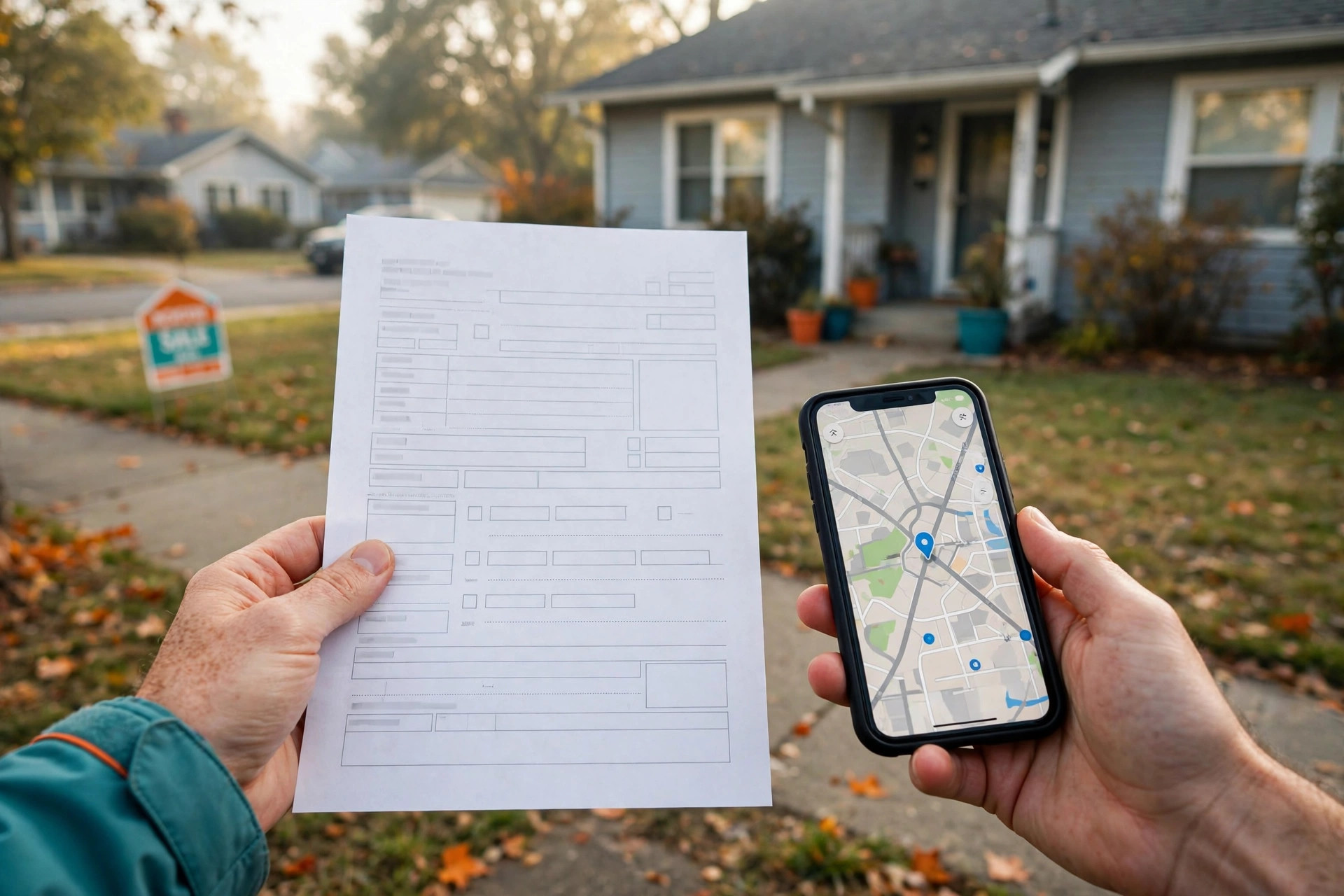
The listing tells you more than the address. Look for the terms section before you fall for anything in the photos.
Check how payment works — most companies take cards, but a few smaller ones are cash only. Check whether the sale uses a numbers system on opening morning: early arrivals take a number, and entry happens in order, which beats a free-for-all push at the door. And check the discount schedule if it’s posted. Many companies state it plainly: full price day one, a set percentage off day two, deeper on the final day.
Then scan the photos with a short list in mind. You’re not browsing, you’re scouting. Note the two or three items you’d go for first, and note which room they’re in. When the door opens, the people who wander room to room lose the good pieces to the people who walk straight to them.
What to buy: the categories that rarely disappoint
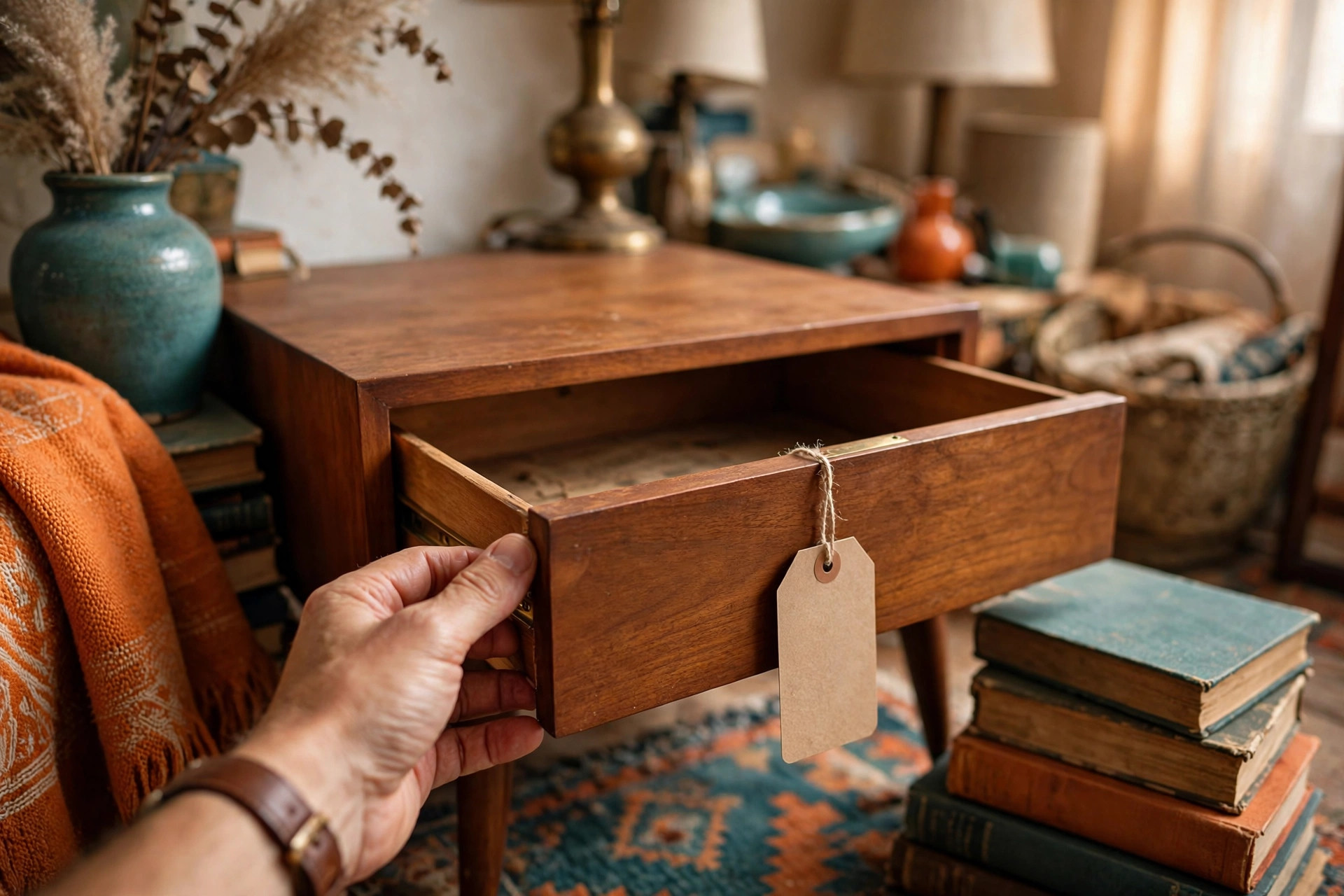
Solid wood furniture. Older dressers, side tables, and dining chairs were often built from real wood with dovetail joints, and they sell at estate sales for less than flat-pack furniture costs new. Open drawers. Look at the back and underside. Real wood and tidy joinery are easy to spot once you’ve seen them twice.
Kitchen workhorses. Cast iron pans, heavy stainless cookware, Pyrex and CorningWare from earlier decades, sturdy utensils with wooden handles. Kitchens accumulate quality quietly, and estate pricing rarely reflects what a new equivalent costs.
Tools and garden gear. Hand tools from a home workshop — planes, clamps, wrenches, garden tools with ash handles — were often bought once and kept for life. Test edges and moving parts, and don’t skip the garage. Shoppers crowd the living room and ignore the garage, which is backwards.
Records, art, and the odd stuff. Vinyl collections, original art bought from local artists, film cameras, typewriters, board games with all their pieces. These are the finds with character, the ones thrift stores price high because they know. At an estate sale, they’re just part of the household.
What to walk past
Not everything old is a bargain. Skip upholstered pieces you can’t fully inspect — lift cushions, check underneath, and trust your nose, because smoke and mildew smells rarely wash out of foam. Be cautious with older electronics unless the listing says they work; repair costs eat the savings fast. And pass on anything chipped, cracked, or wobbly unless you genuinely enjoy the repair. A project you never finish is just expensive clutter.
Timing: first morning or final day?
This is the estate sale trade-off, and there’s no single right answer. Go at opening on day one and you get the full house: every rare piece still there, at full price. Go on the final day and prices drop, sometimes steeply, but the standout pieces are gone and you’re choosing from what everyone else passed on.
A simple way to decide: if it’s one of a kind and you’d be annoyed to miss it, go early and pay the tag. If it’s a category — kitchen gear, linens, garden tools, books — go late and let the discount do the work. Plenty of regulars do both: a quick early pass for the dream item, a relaxed late pass for the bargains.
Doing the final-day maths in your head? Skip the guesswork — work out the exact price after a percentage discount with this free discount calculator before you head to the till.
House rules: etiquette that keeps you welcome
Estate sale staff remember good shoppers, and it pays to be one. Carry smaller bags or leave big totes in the car if the listing asks. If there’s a hold table, use it for bulky items instead of dragging them around. Ask before plugging in an appliance to test it — most companies are happy to show you an outlet. And haggling? On day one, the tag is the tag at most company-run sales. On the final day, a polite question about a bundle — three items, one price — is normal and often works.
Bring the practical kit: a tape measure, your room measurements on your phone, a torch for dark basements, and cash even if cards are accepted, because the Wi-Fi in a stranger’s house has humbled many a card reader.

Your first estate sale, step by step
- On Wednesday, search the listing sites for sales within a distance you’ll actually drive, and pick one with photos that show full rooms.
- Make your short list: two or three target items, their rooms, and the most you’d pay for each.
- Arrive 30 minutes before opening if you want a target item; take a number if the sale offers one.
- Walk straight to your targets first. Decide fast, carry smalls, and put heavies on the hold table.
- Do one slow lap afterwards for the sleepers — garage, basement, and linen cupboard included.
- Before paying, re-check each item for damage you missed in the rush. No returns is the standard rule at estate sales.
Frequently Asked Questions
Are estate sales cheaper than thrift stores?
Often, yes, for furniture and household goods — especially on the final day, when posted discounts cut tagged prices. Rare and collectible items are priced closer to market value because the selling company works on commission, but everyday quality — solid wood, cast iron, good tools — usually costs less than in a thrift store.
What is the best day to go to an estate sale?
Day one for selection, the final day for price. If you want a specific piece you saw in the listing photos, go at opening on the first day. If you’re browsing categories like kitchenware, books, or garden tools, the final day’s discounts stretch your money further.
Can you negotiate at an estate sale?
At company-run sales, prices are usually firm on the first day. Later in the sale, polite offers — especially bundle offers on several items — are commonly accepted. Ask once, nicely, and accept the answer either way.
What should you bring to an estate sale?
Bring a tape measure, measurements of the spaces you’re buying for, cash as a backup to cards, a torch for basements and garages, and bags or a box for small items. If you plan to buy furniture, bring a vehicle it actually fits in, or arrange pickup within the sale’s stated window.
Do estate sales take credit cards?
Most professional estate sale companies do, but not all of them, and smaller family-run sales may be cash only. The listing states the accepted payment methods — check it before you go so a perfect find doesn’t strand you at the till.
One last thought. An estate sale is a house telling its story all at once, and everything in it was chosen by someone who lived there. Shop with a list, sure. But leave a little room in the car for the thing you never knew you wanted. That’s usually the piece you keep longest.
This article was created with AI assistance and reviewed by our editorial team before publishing.