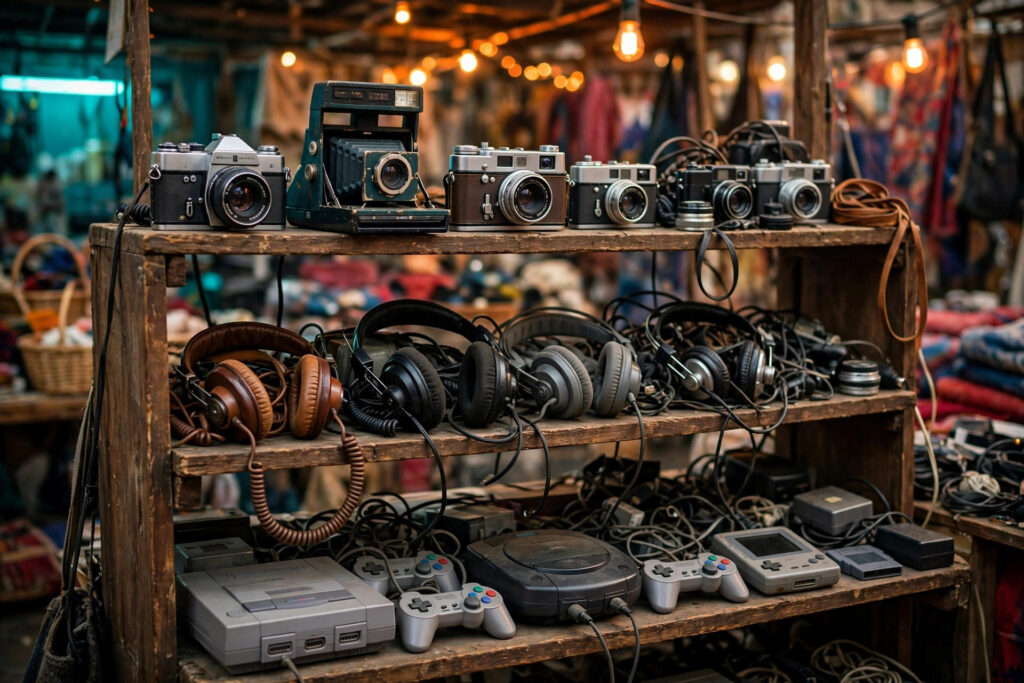
Thrift store electronics can be the best money on the shelf or a total dud in a box. Buy gear you can test in the aisle, with cables and remotes included. Skip anything with a swollen battery, a missing charger you can’t replace, or damage you can’t check before you pay.
That shelf is a treasure hunt, no question. One visit turns up a dusty turntable nobody priced right. The next? Three printers and a tangle of phone cases. The trick isn’t luck. It’s knowing what you can test in two minutes, and what will eat your profit in returns, parts, and postage.
Why electronics reward picky buyers
Clothes are easy to judge. Hold them up, check the seams, done. Electronics hide their problems. A console can look mint and still refuse to read a disc. A camera can power on, then die the second you press the shutter.
That’s also why the good stuff sits there. Plenty of shoppers walk straight past a receiver or a mechanical keyboard because they don’t want the hassle. If you’re willing to test properly, you get first pick of gear other resellers were too rushed to check.
Be picky, though. One bad buy ties up cash you could’ve spent on three clean flips. Walk away a lot. The shelf will refill.
The gear most worth picking up
Start with stuff that’s simple, sturdy, and easy to ship. Vintage audio is a sweet spot: receivers, turntables, and speakers from known brands, as long as every knob and input works. Headphones with a standard cable are simple to test on your phone. So are wired game controllers, if every button feels crisp.
Film cameras and older digital cameras draw steady interest, especially when the battery door shuts tight and the lens looks clean. Handheld game consoles are strong finds too — if they charge, hold that charge, and read a game without throwing errors.
Small kitchen electronics can surprise you. A clean stand mixer or espresso accessory with all its parts beats a mystery gadget every time. Check for the boring bits: drip trays, portafilters, lids, and power cords. Missing parts turn a quick listing into weeks of hunting spares.
Buy it or leave it? A quick side-by-side
Use this table at the shelf. If a piece fails its test step, it drops from buy to skip, whatever the price tag says.
| Category | Buy when | Skip when | Quick test |
|---|---|---|---|
| Vintage audio | All inputs and knobs work, sound is clean | Crackling channels you can’t fix, cut cords | Plug in, run each input, turn every knob slowly |
| Cameras | Shutter fires, lens is clear, battery door shuts | Fungus in the lens, corroded battery contacts | Open the battery bay, fire the shutter, check the lens against the light |
| Game consoles | It boots, reads a game, controller connects | It won’t read discs, ports are loose or bent | Power it on at the outlet, load a game if one is nearby |
| Headphones | Both sides play, cable is intact | One side is silent, battery won’t charge | Play music, wiggle the cable gently, check both ears |
| Small appliances | Every part is present, motor sounds steady | Key parts are missing, it smells burnt | Run it empty for a few seconds, sniff for burnt wiring |
| Phones and tablets | Screen is unlocked, it charges, no account lock shows | It’s locked to someone else’s account, battery is swollen | Turn it on, check the lock screen, plug it in and watch the charge icon |
What to skip, even when it’s cheap
Printers are the classic trap. They look like easy money and ship like a nightmare. Ink, drivers, and paper jams make buyers unhappy fast, and a big box means pricey postage. Unless you know a specific model sells and you can print a test page in the store, leave it.
Skip anything locked to a previous owner’s account. A tablet or phone that asks for someone else’s sign-in isn’t a bargain, it’s a paperweight you can’t honestly list as working. Same goes for gear with a swollen battery. That’s a safety problem, not a project.
Big TVs and bulky monitors? Tempting, but shipping damage and local-only sales shrink your buyer pool hard. And be honest about cracked screens, frayed cords, and mystery stains on power bricks. If you wouldn’t plug it in at home, don’t sell it to a stranger.
Test it right there in the aisle
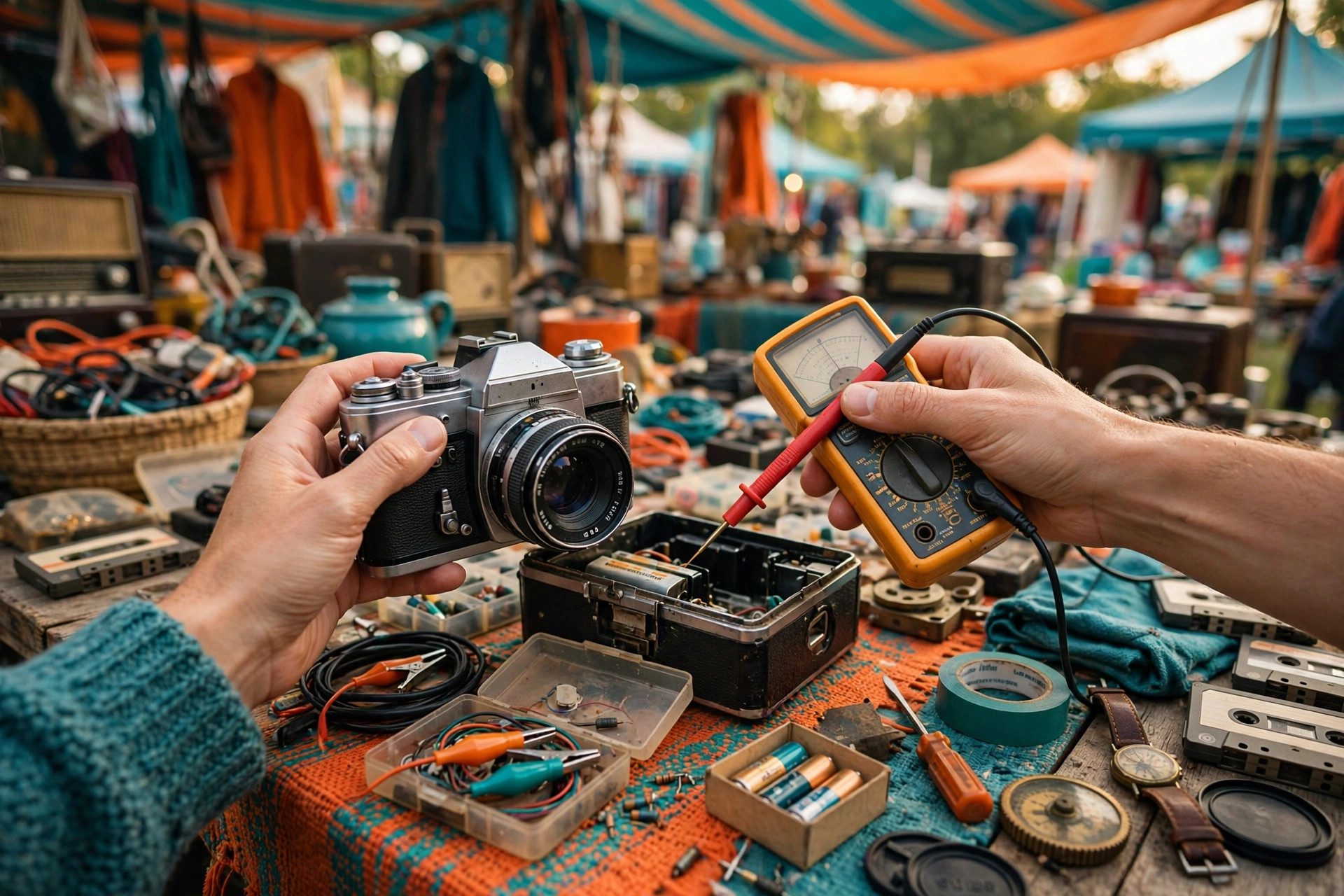
Most thrift stores have an outlet near the electronics shelf for a reason. Use it. Here’s a fast routine that catches most duds:
- Look first. Check battery bays for white or green corrosion, sniff for a burnt smell, and shake gently — loose rattling inside is bad news.
- Power it on and leave it on. A device that dies after a minute was never fine.
- Work every control. Buttons, dials, sliders, ports. Plug your phone cable in. Connect headphones. Load a disc if you can.
- Check what’s missing. No charger, no remote, no cable? Price that in, or walk.
- Search sold listings on your phone, not just asking prices. Filter for completed sales of the same model in similar condition.
Don’t skip the sold-listings step. Asking prices are wishes. Sold prices are facts, and they’re right there on the marketplace apps before you spend a cent.
Work out your margin before you pay
A cheap buy price means nothing on its own. Add the real costs: the marketplace fee on the final price, payment processing, a box and padding, postage, and your time cleaning and testing. Then compare that total with what similar items actually sold for, not what sellers hope they’ll get.
Heavy gear punishes you here. A bargain receiver that costs a fortune to post can end up earning less than a small pair of headphones you can ship in a padded envelope. Size and weight belong in the maths from the start.
If the numbers feel tight in the store, they’re tight. Put it back. There’s always another shelf, another day.
Working out what is left after fees and postage? Run the numbers with this free percentage calculator before you commit to a price.
List it honestly, pack it like you mean it
Good listings for used electronics say exactly what was tested and what wasn’t. “Powers on, shutter fires, battery not included” beats vague promises every time. Buyers pay for certainty. They return surprises.
Photograph the flaws. A scuff in the photos is a detail. The same scuff hidden is a dispute. Show the model label, the ports, and the screen switched on, so a buyer can see it working before it ships.
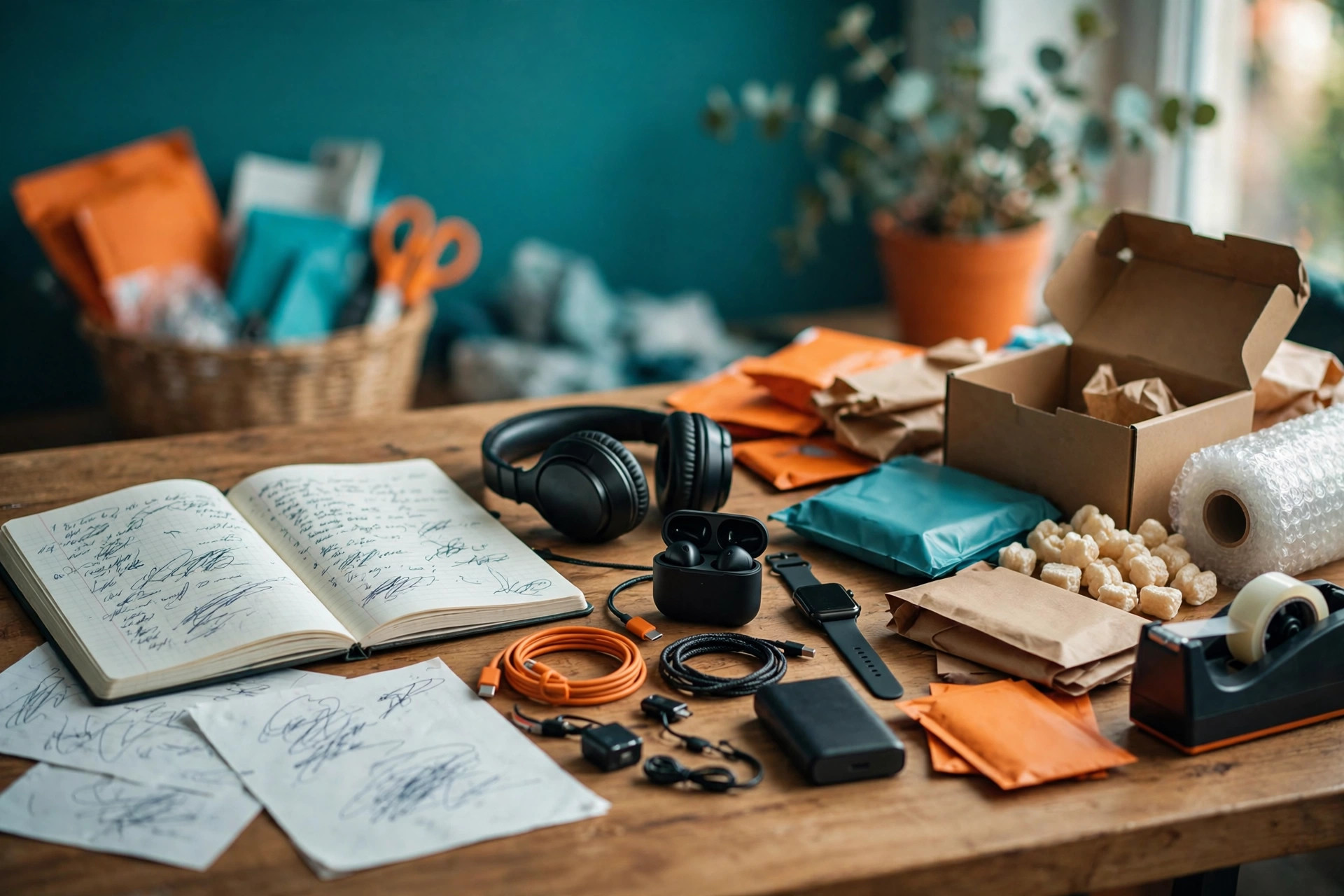
Packing matters just as much. Wrap screens, tape down loose cables, and pad corners so the box can survive a drop. A console that arrives cracked costs you the refund and the return postage. Five extra minutes with bubble wrap is cheap insurance.
Bottom line
Buy thrift store electronics you can test on the spot, with the cables and parts included, in categories you can ship safely. Check sold listings before you pay, run the fee and postage maths honestly, and describe every flaw in the listing. Skip locked devices, swollen batteries, and bulky gear you can’t post without risk. Do that, and the electronics shelf stops being a gamble. It becomes the most fun aisle in the store — and the one that pays for the rest of your haul.
This article was created with AI assistance and reviewed by our editorial team before publishing.